Roof installation Tomball TX for lasting protection
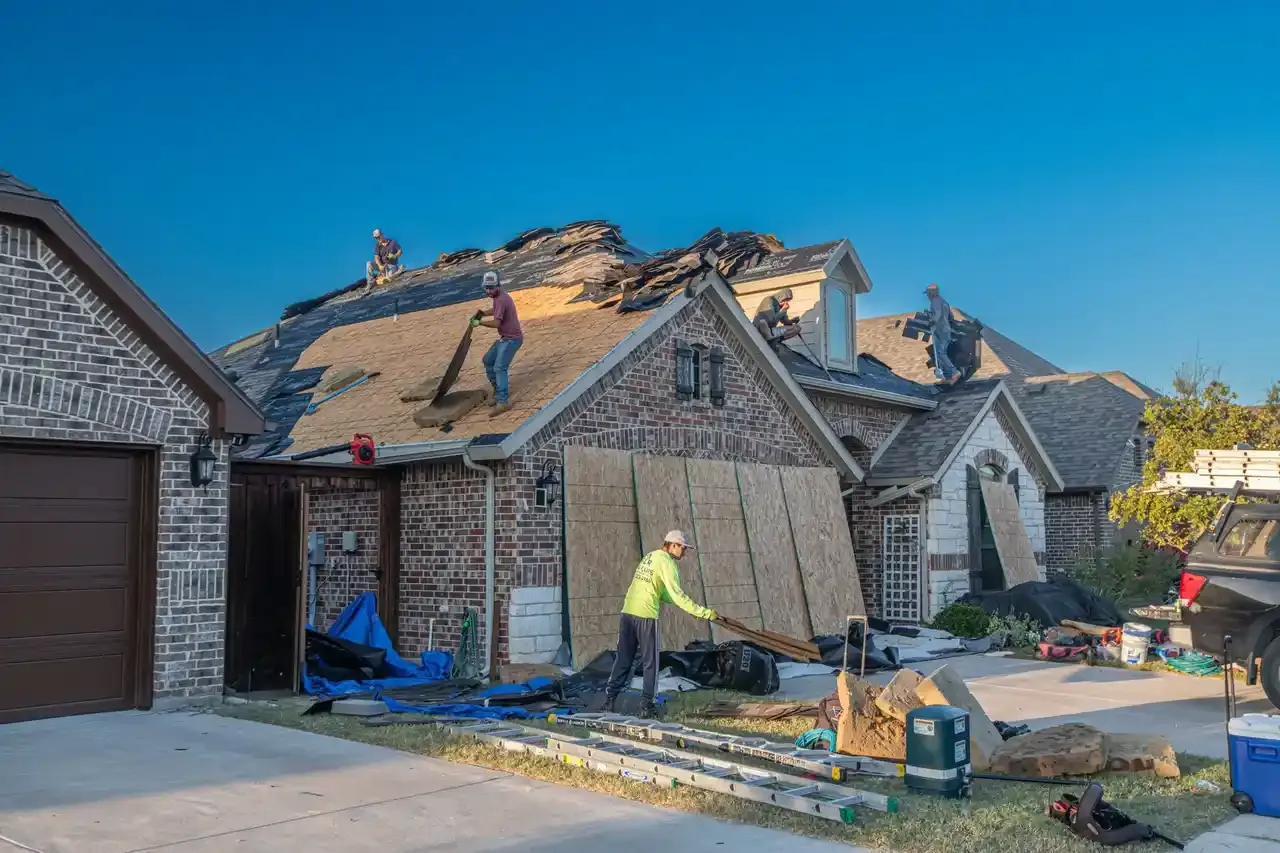
Roof installation Tomball TX gives homeowners and property managers a complete roofing system built for the structure, not a quick cover-up. We assess the decking, drainage, ventilation, and roof shape, then explain material choices and the work sequence. If missing shingles, recurring leaks, or storm damage have pushed your roof past repair, our Tomball team helps you plan a new roof installation that protects the building and keeps the job organized.
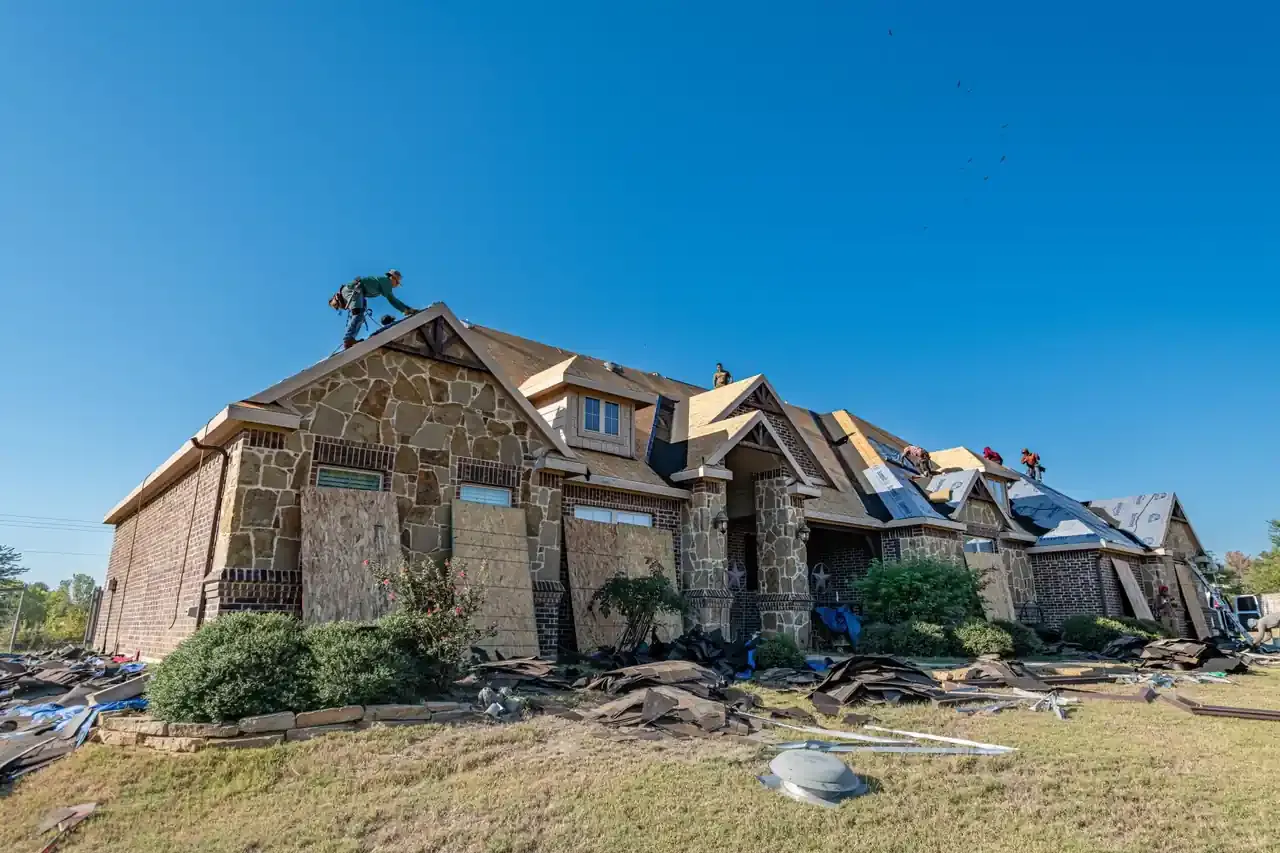
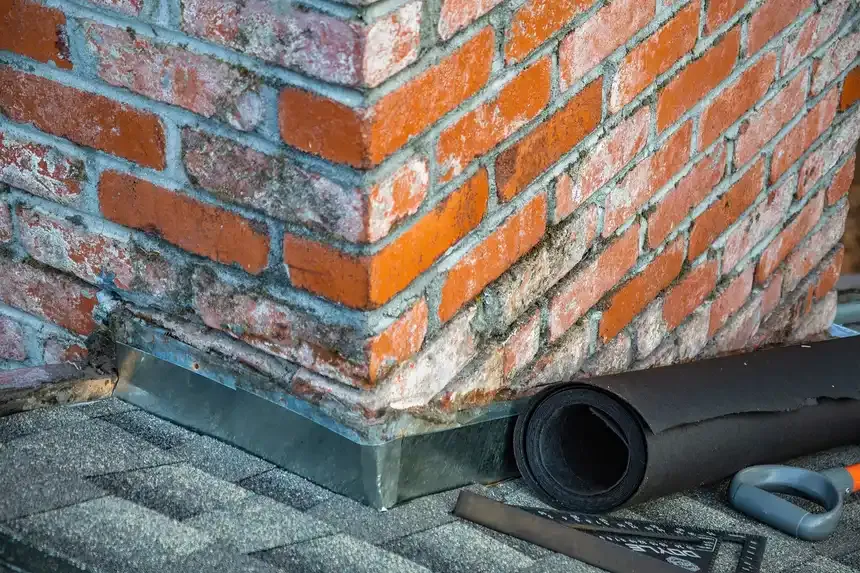
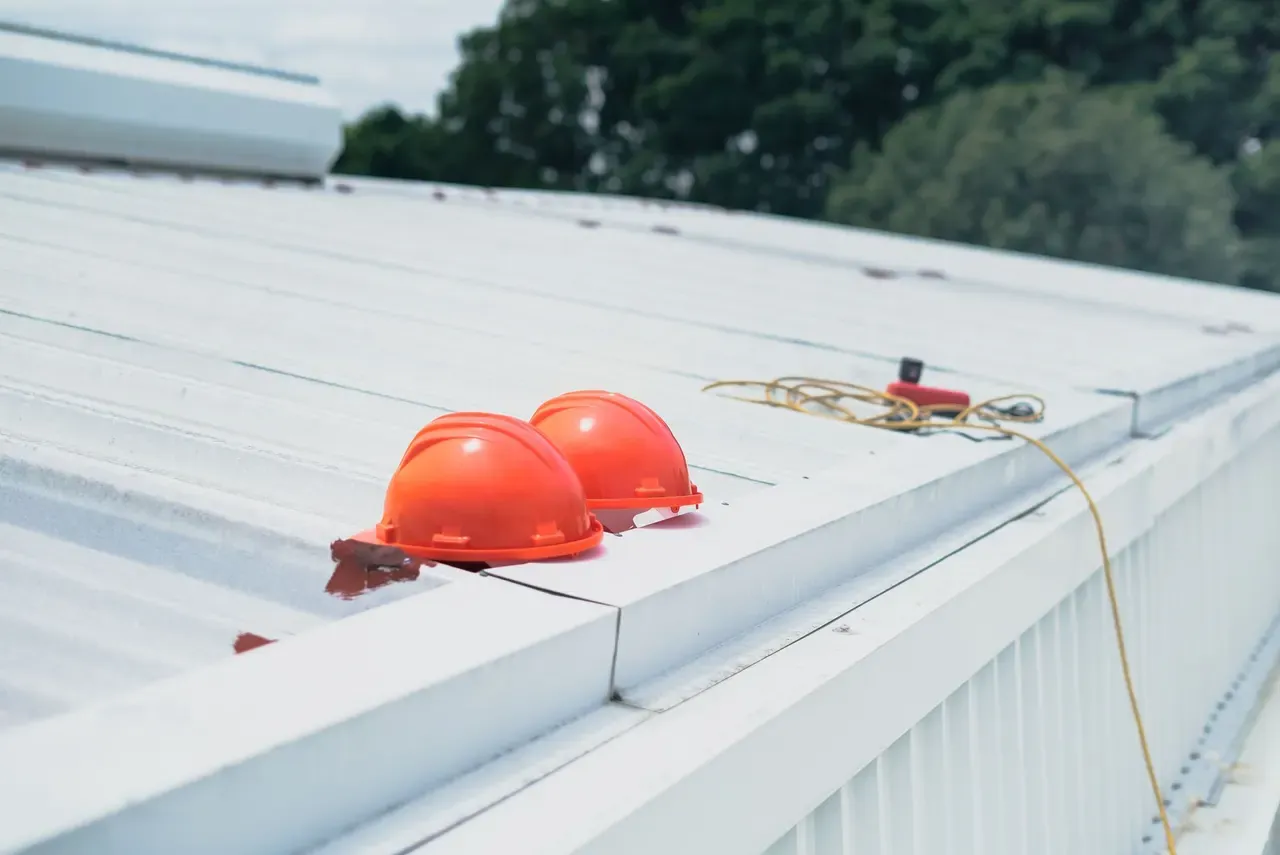
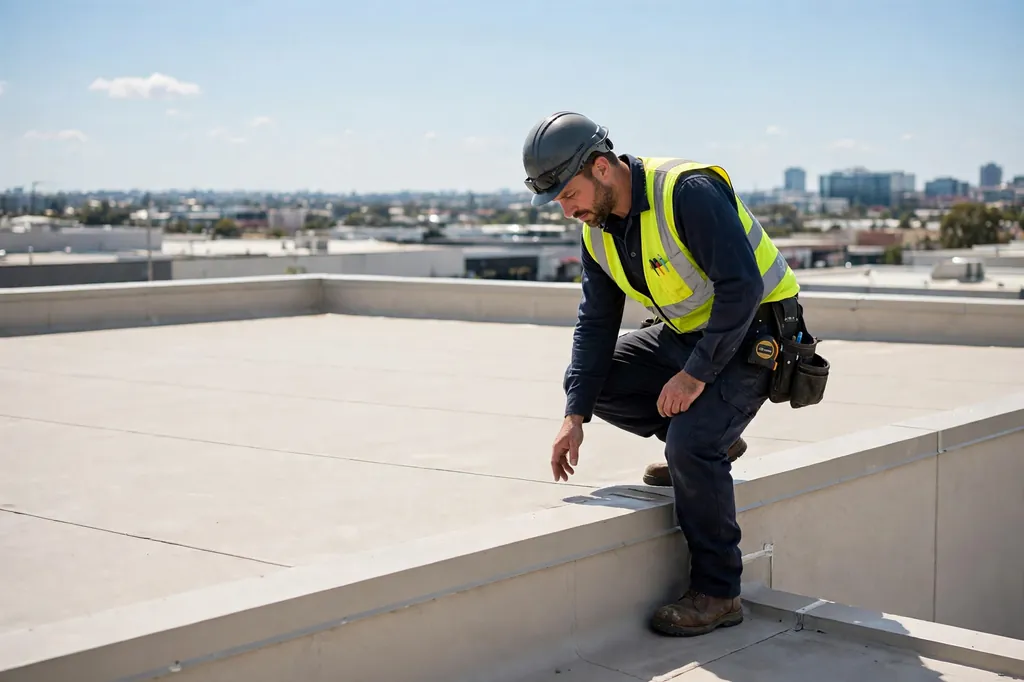
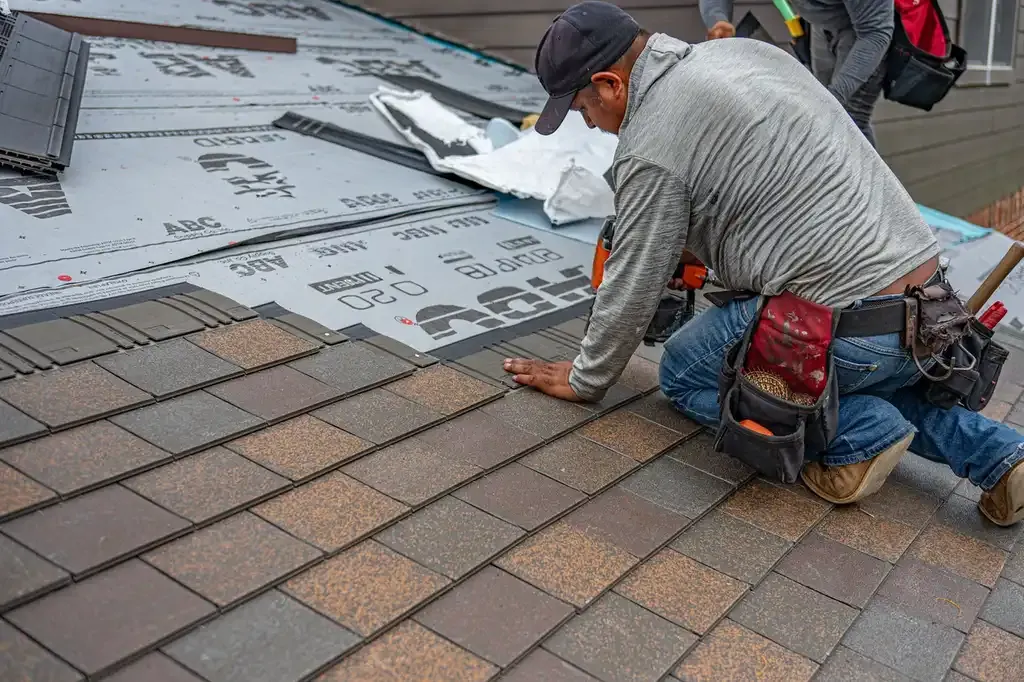
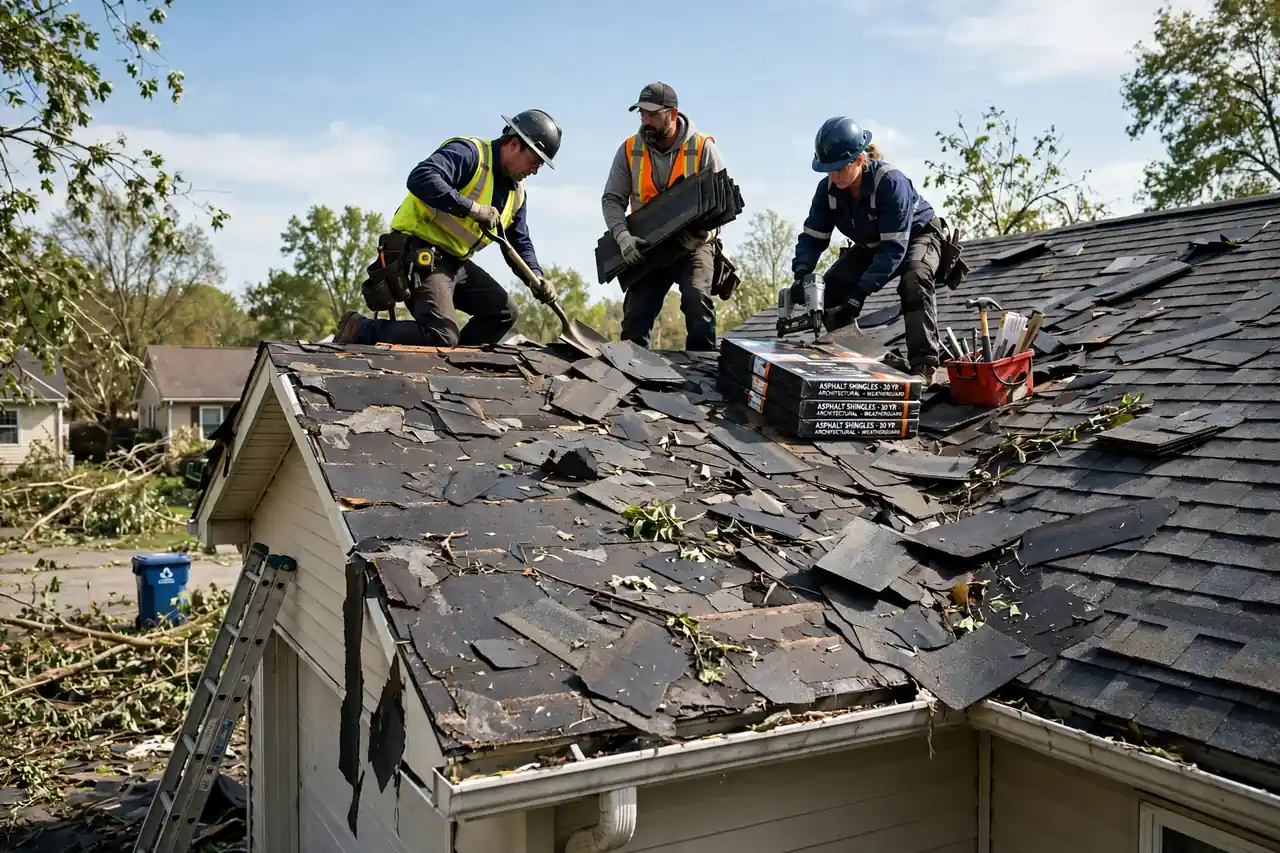
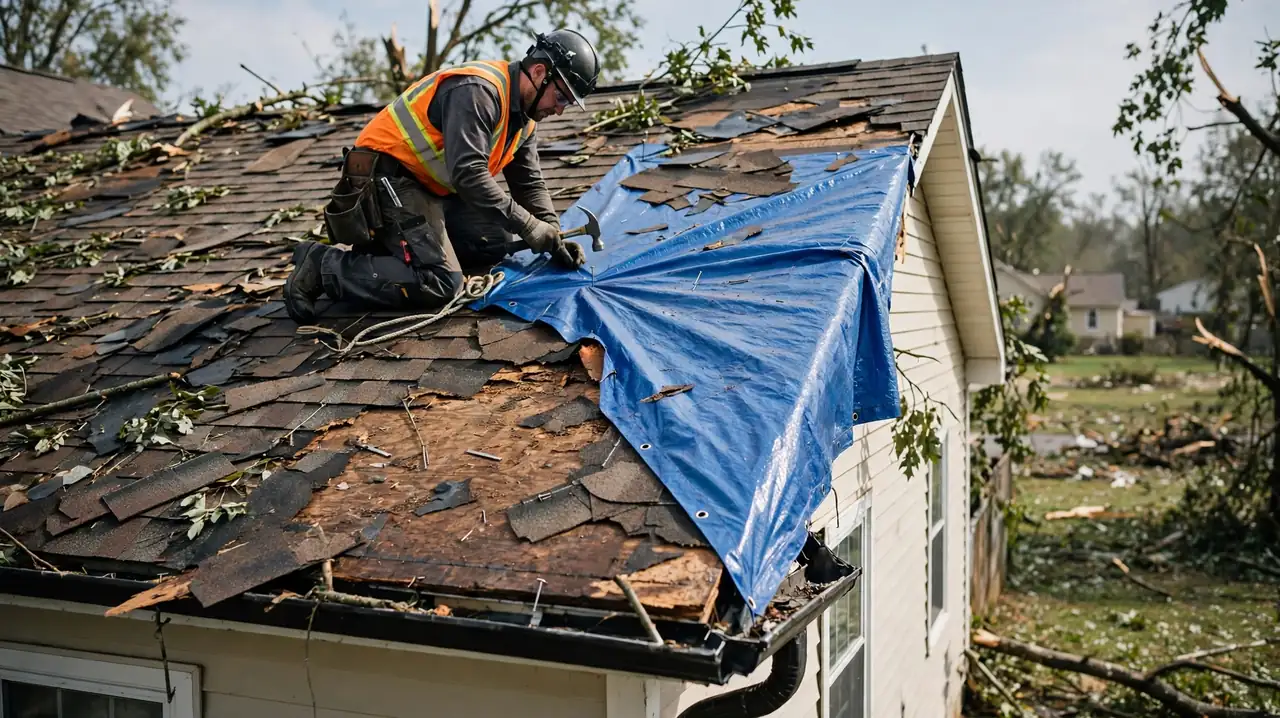
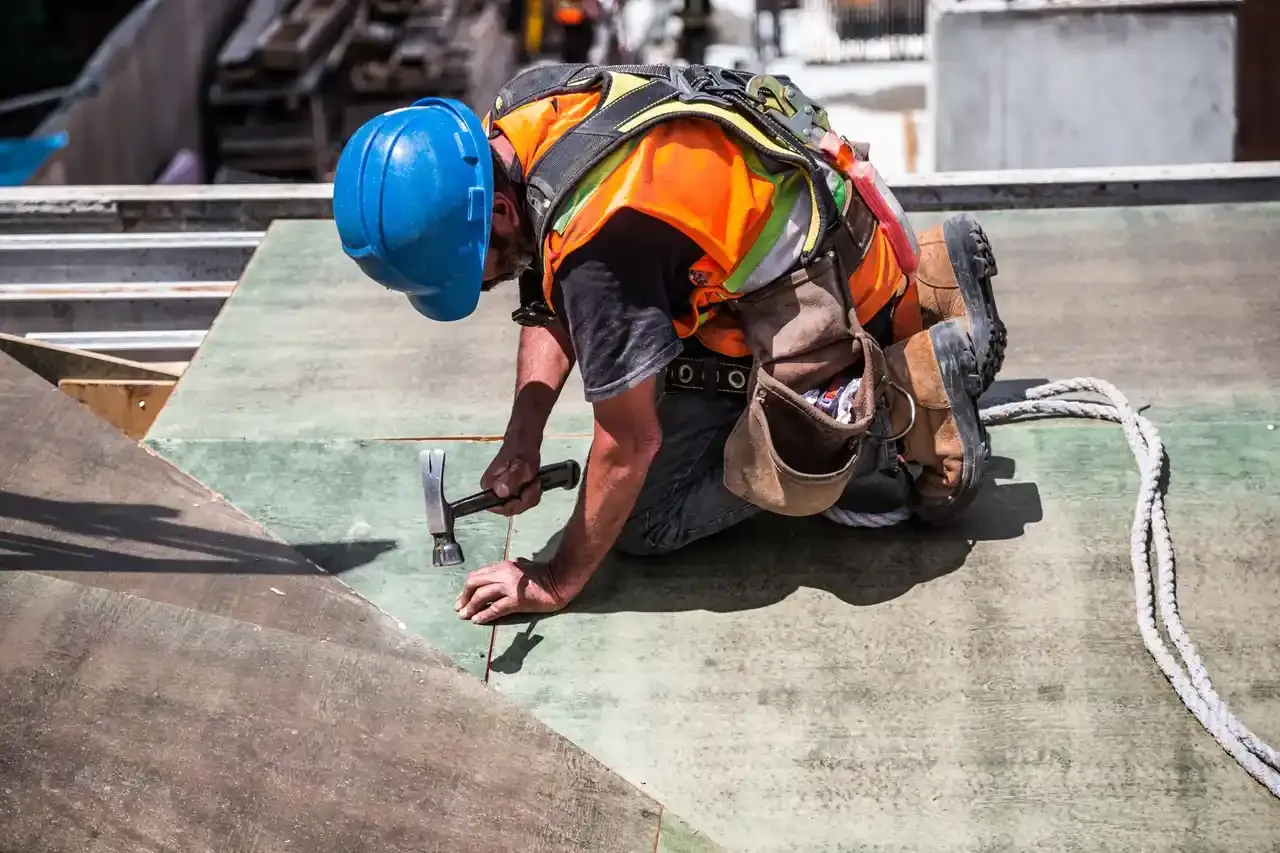
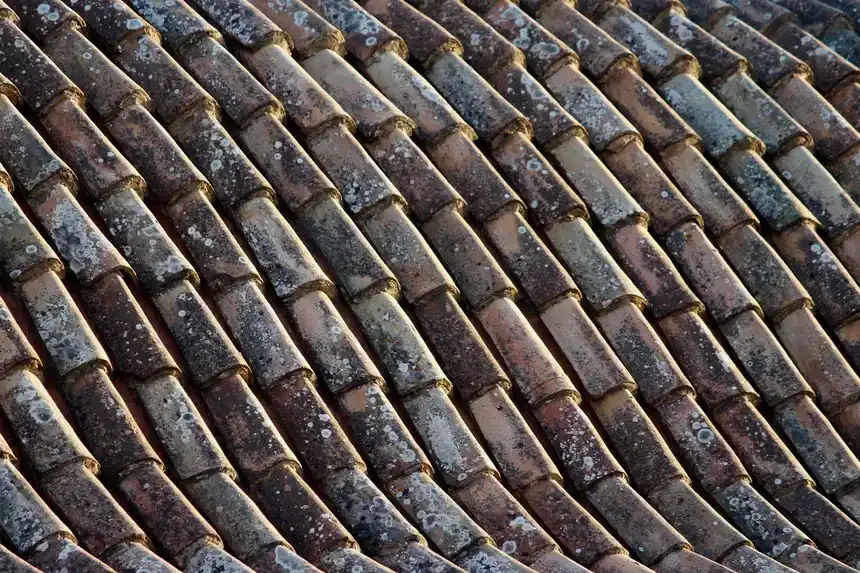
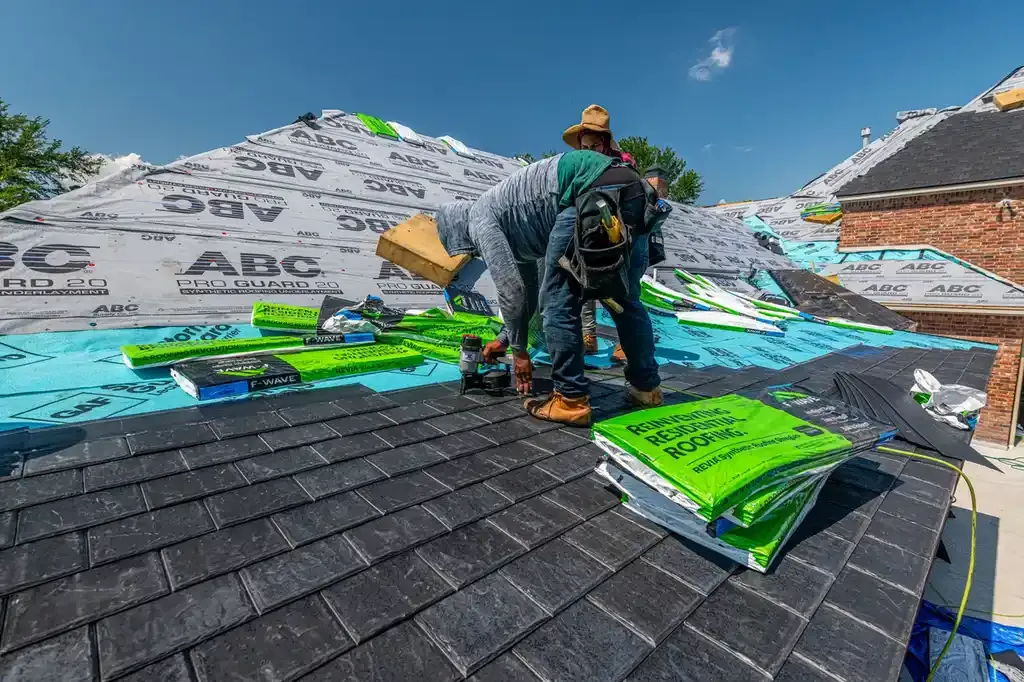
Marked work zoneAccess and staging are explained first
Deck checkedExposed wood is reviewed before covering
Materials organizedProducts are staged by installation sequence
Cleanup checkedLoose debris is collected before walkthrough
What roof installation includes
A standard installation covers the planned roof removal or preparation, inspection of exposed decking, underlayment, selected roof covering, and key water-management details. We review flashing, edges, and ventilation as part of the roof system. Decking repairs, gutter changes, skylights, or structural work depend on the conditions found and the choices made for your project; we explain those items before they are added to the work.
Surface and deck review
We examine the existing covering and inspect exposed roof decking after removal. The crew identifies soft or damaged sections that need correction before new material is installed. This step keeps the finished roof supported and gives you a clear record of any substrate work.
Underlayment installation
We install roof underlayment as a secondary water-shedding layer beneath the selected covering. Placement and fastening follow the roof layout and product requirements, with extra care around transitions. The underlayment supports the roof system but does not replace proper flashing or surface material.
Roof covering and edges
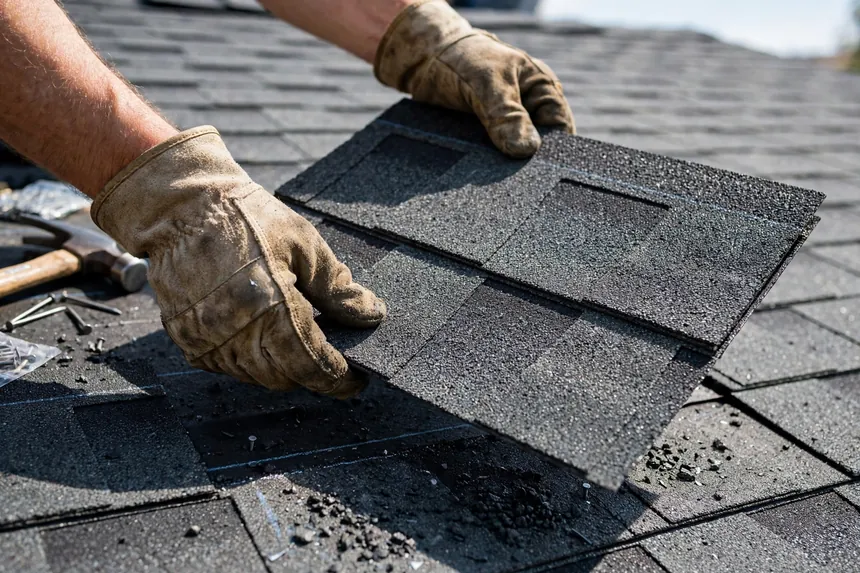
The planned asphalt shingles, metal roofing panels, or other selected covering are fitted across the prepared roof. We align courses, secure edges, and finish ridges according to the system. Drip edge and related edge details help direct runoff toward the drainage path.
Flashing and penetrations
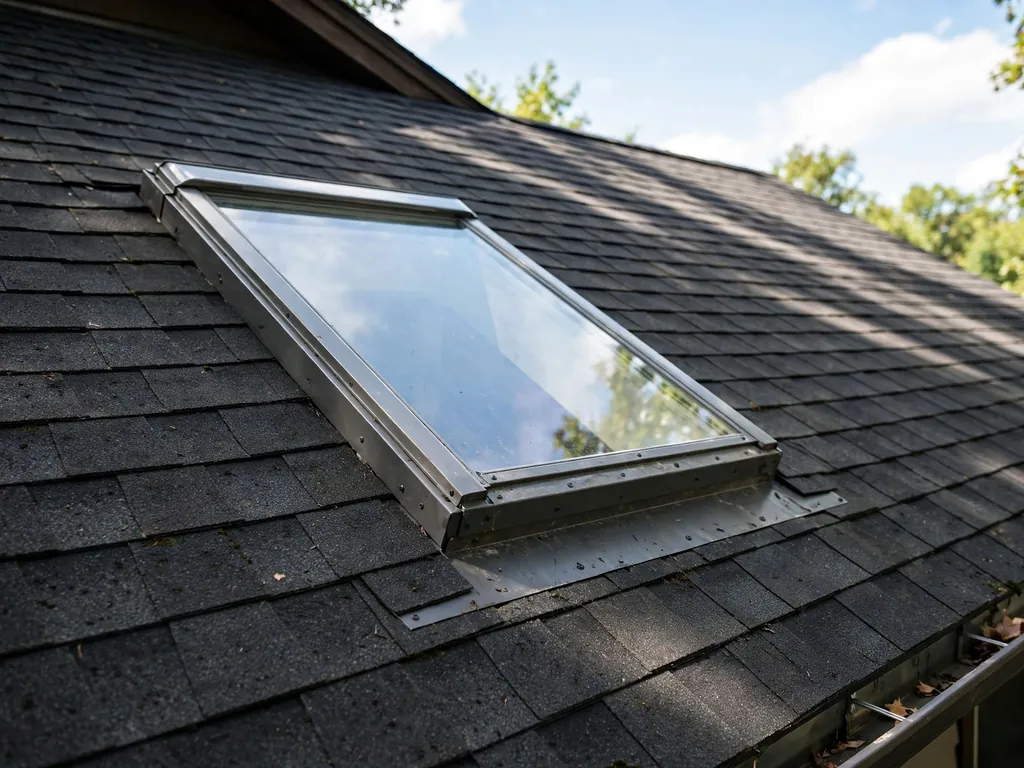
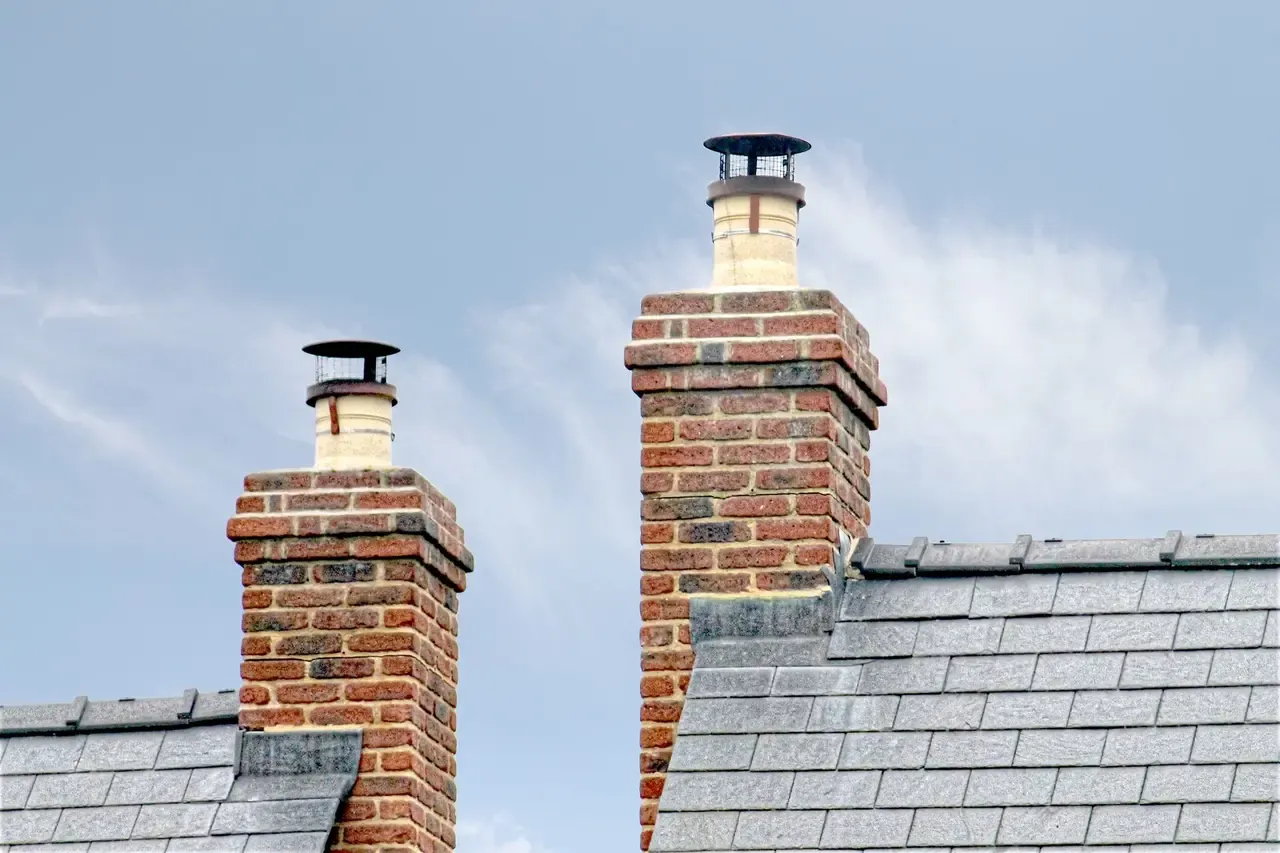
We address roof interruptions such as vents, walls, valleys, and chimneys with compatible flashing details. These junctions need careful sequencing so water moves over the roof rather than behind it. Skylight work or extensive chimney corrections are discussed according to the condition and project scope.
Cleanup and walkthrough
At completion, the crew clears job debris and checks accessible areas for loose material and fasteners. We walk the finished work with you, review the installed materials, and explain maintenance points. Gutter replacement and landscaping restoration are separate items when the property calls for them.
Homes and businesses.
The approach is the same for a home and a business. What changes is the access, the schedule and who needs the paperwork.
For homes
We plan around your household access, driveway use, and protection of nearby landscaping. You will know which roof areas are being worked on and what to expect during removal.
Recurring ceiling stains after rain
Curling shingles across several slopes
Deck repairs found during tear-off
For businesses
We review building access, roof drainage, and the needs of occupants before planning work. You receive a clear sequence for staging materials and keeping roof activity organized.
Worn membrane around roof penetrations
Drainage problems across a flat roof
Roof work near active entrances
Roof installation Tomball TX, explained
A plain-language look at what Roof Installation involves and when it is needed.
Roof installation Tomball TX is a roofing service that replaces or builds a complete roof system to protect a home or commercial building from weather and water intrusion. Our work starts with measurements and a check of roof decking, valleys, edges, penetrations, and ventilation. We remove unsuitable material, repair the substrate, install roof underlayment and flashing, then fit the selected covering according to its installation requirements. The result is a coordinated assembly, not simply new shingles laid over a problem that remains underneath.
Tomball's heavy rain, humidity, heat, and seasonal storms can expose weak seams and aging materials quickly. Roof leaks, wind damage, and curling shingles often lead homeowners to consider Tomball roof installation rather than another isolated patch. We inspect the attic and roof surface, look for moisture and decking rot, and discuss practical options for the building. For homeowners comparing affordable roof installation in Tomball, Texas, the right scope begins with identifying what must be replaced and what remains serviceable.
A complete roof installation renews the covering and the layers that direct water away from the building.
What it is
A coordinated roof system installed over a prepared structure to shed water and protect the building.
When needed
Consider it when widespread wear, recurring leaks, or storm damage makes isolated repairs ineffective.
What to expect
Inspection, material planning, removal or preparation, installation, cleanup, and a walkthrough.
How installation proceeds
Roof installation in Tomball follows a practical sequence: inspect, plan, protect, install, and verify. We explain what happens each day, identify material and access needs, and keep you informed if hidden damage changes the work. A typical residential project has five clear stages, although roof complexity and weather affect the schedule.
Roof assessment
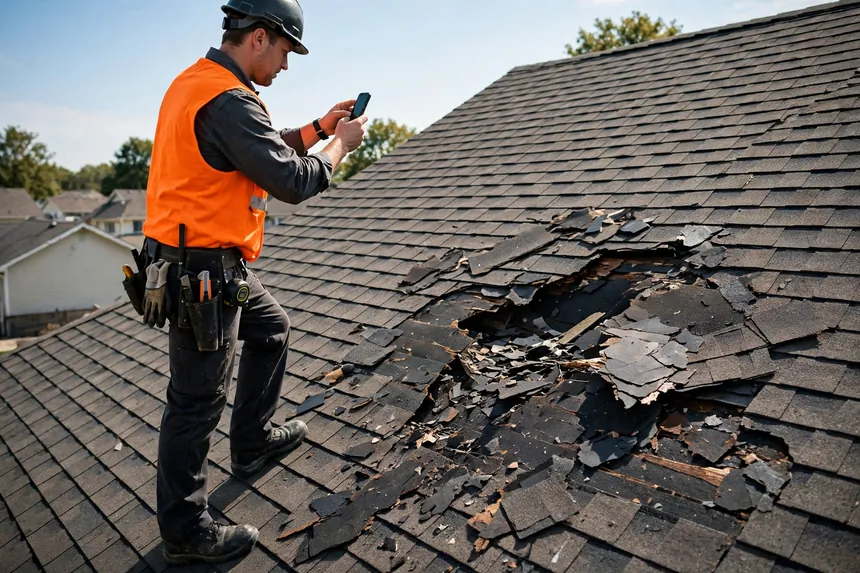
Our team examines the roof surface, attic access, drainage points, and visible flashing, then records measurements and problem areas. We look for leaks, wind damage, and soft decking rather than judging the job from the street. The visit usually takes 45 to 90 minutes for an average home, and you can point out interior stains or past repairs.
Measure roof
Check attic
Record concerns
Material planning
We review suitable roof coverings, color choices, ventilation details, and edge treatments with you. The plan identifies tear-off needs, anticipated decking repairs, underlayment, flashing, and cleanup. You can compare product options from manufacturers such as GAF or Owens Corning, with the final selection based on roof design and product specifications.
Compare materials
Plan details
Review sequence
Property protection
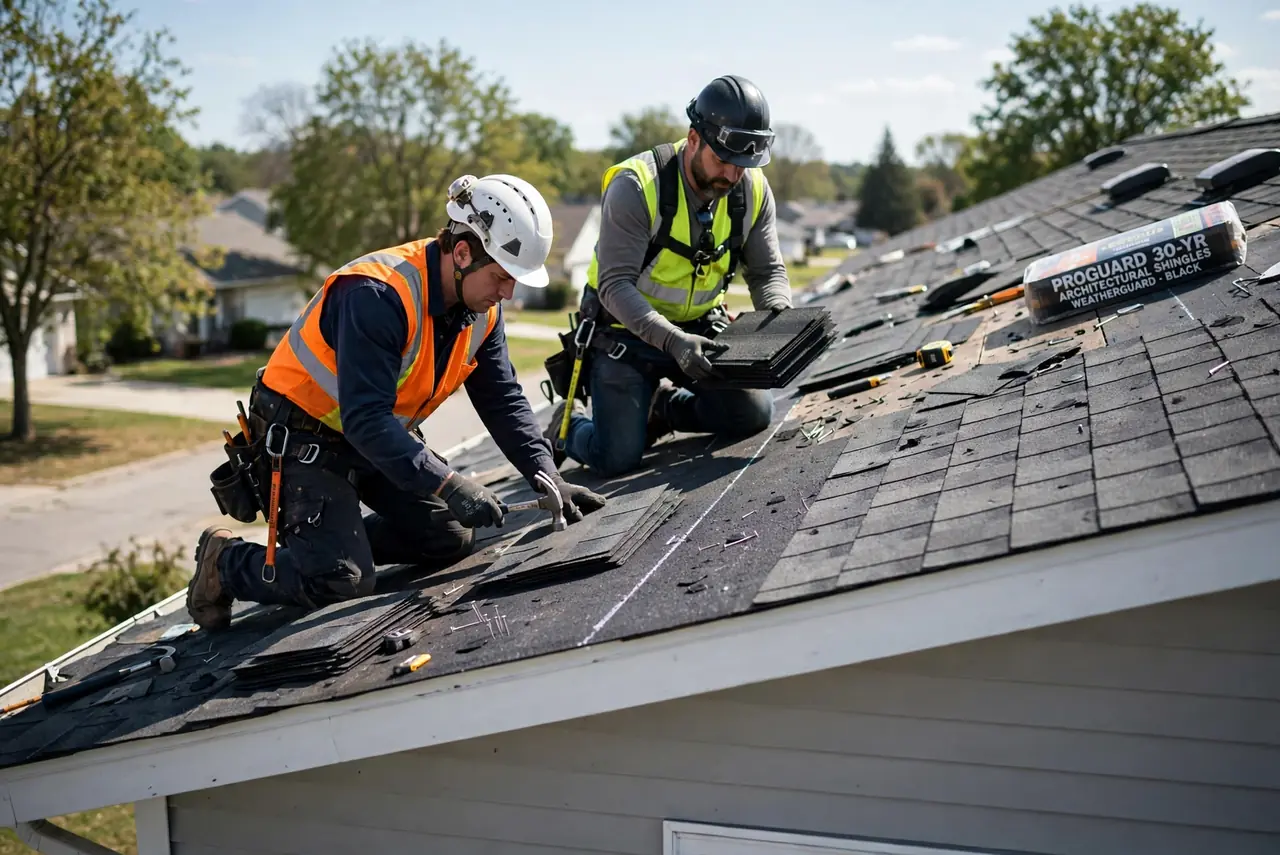
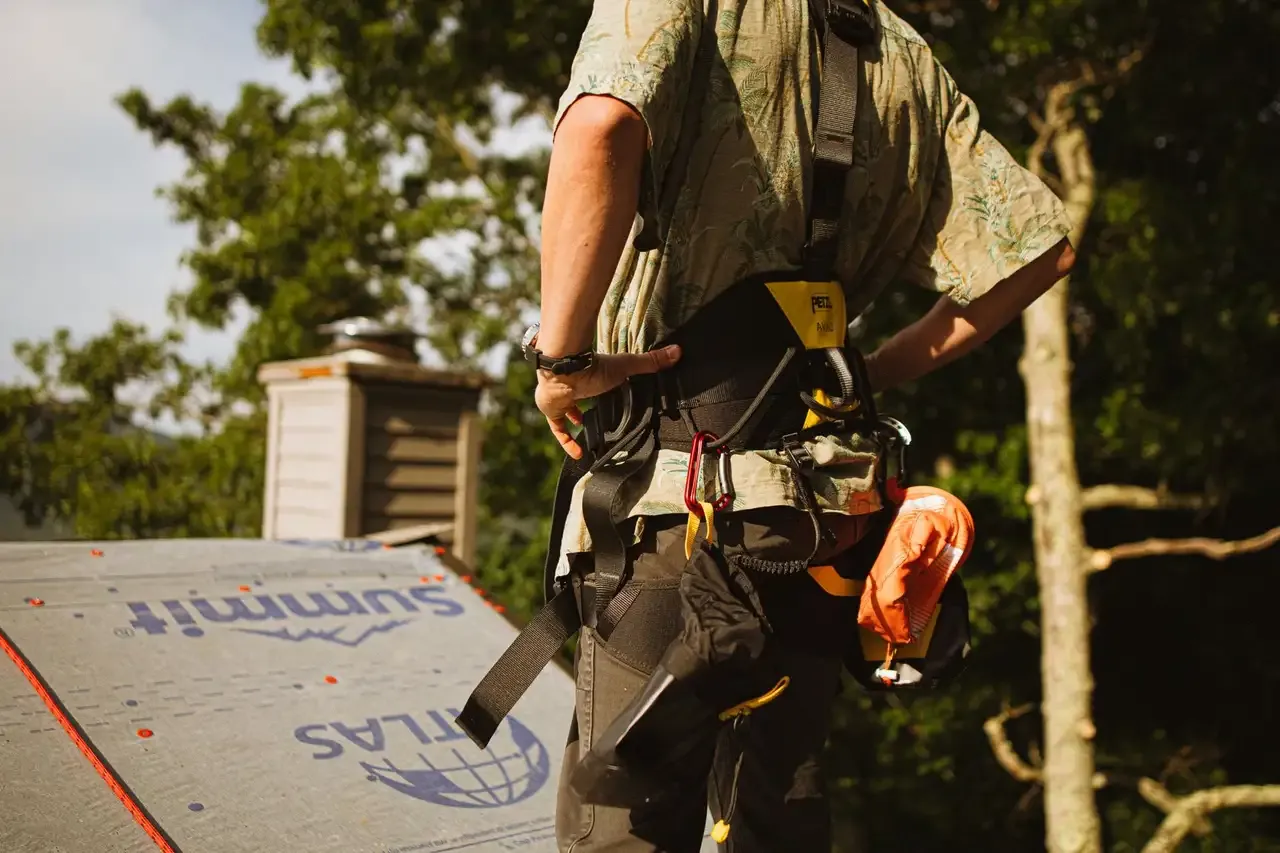
Before removal, we establish safe access, protect landscaping and nearby surfaces, and place debris containers where they will not block your routine. The crew uses roofing ladders and fall protection harnesses while keeping tools and materials staged. You receive a practical heads-up about vehicle access, outdoor items, and the louder portions of the work.
Protect property
Stage equipment
Set access
Roof system installation
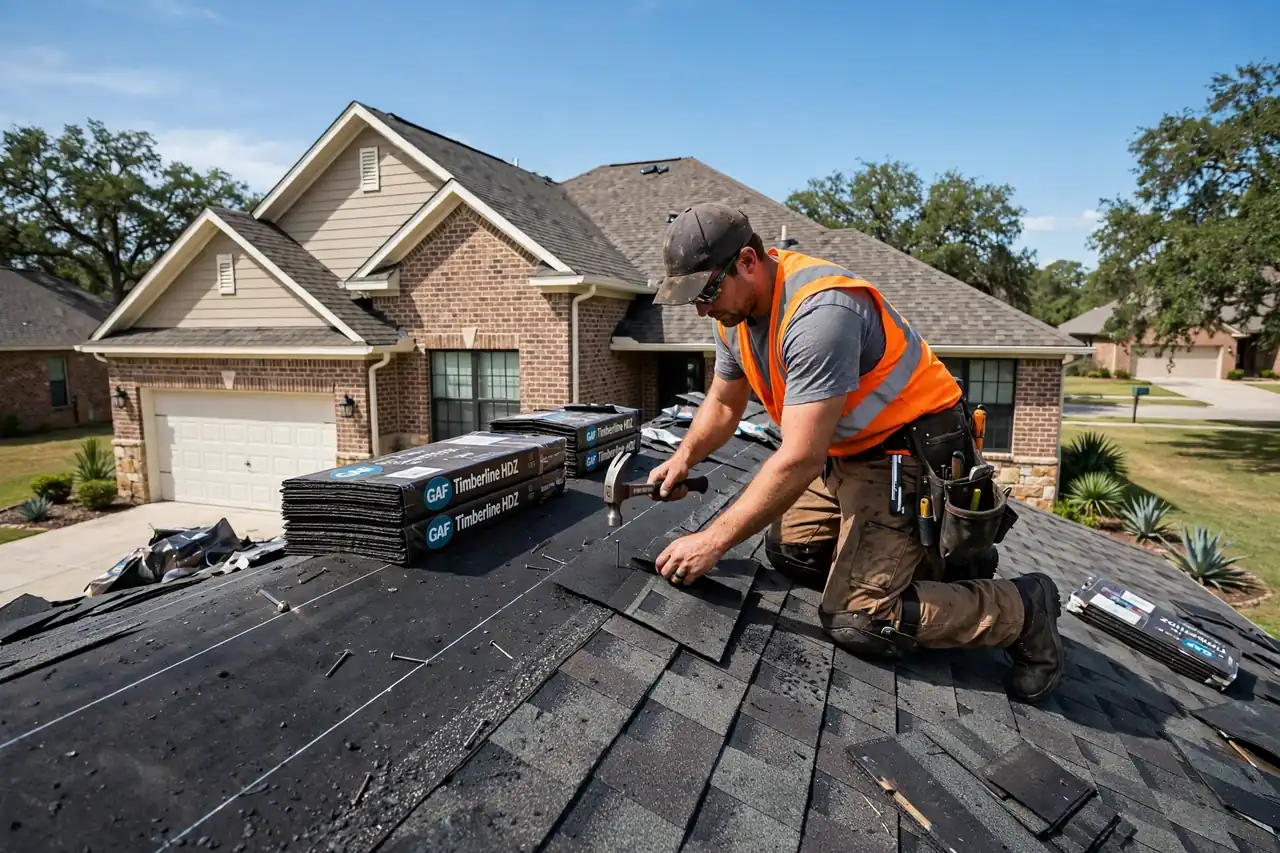
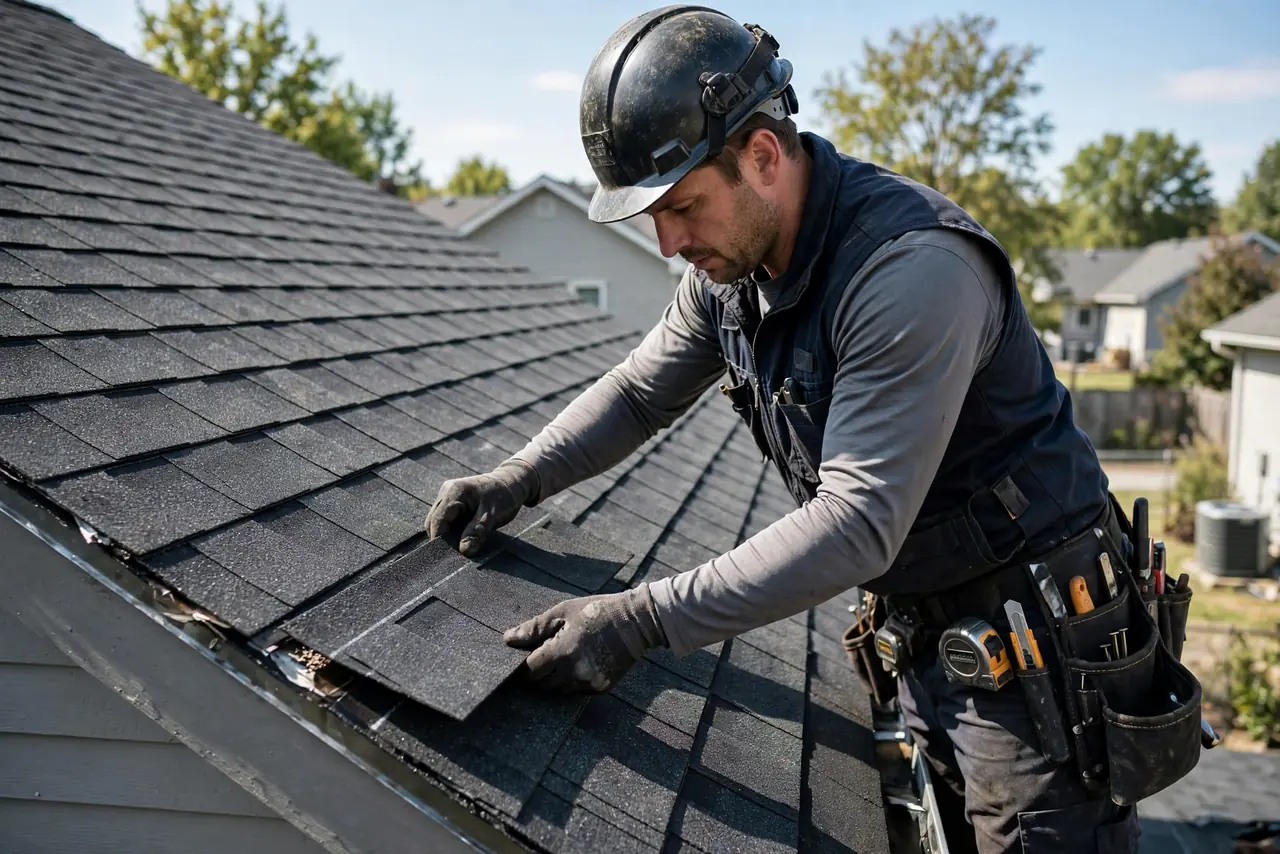
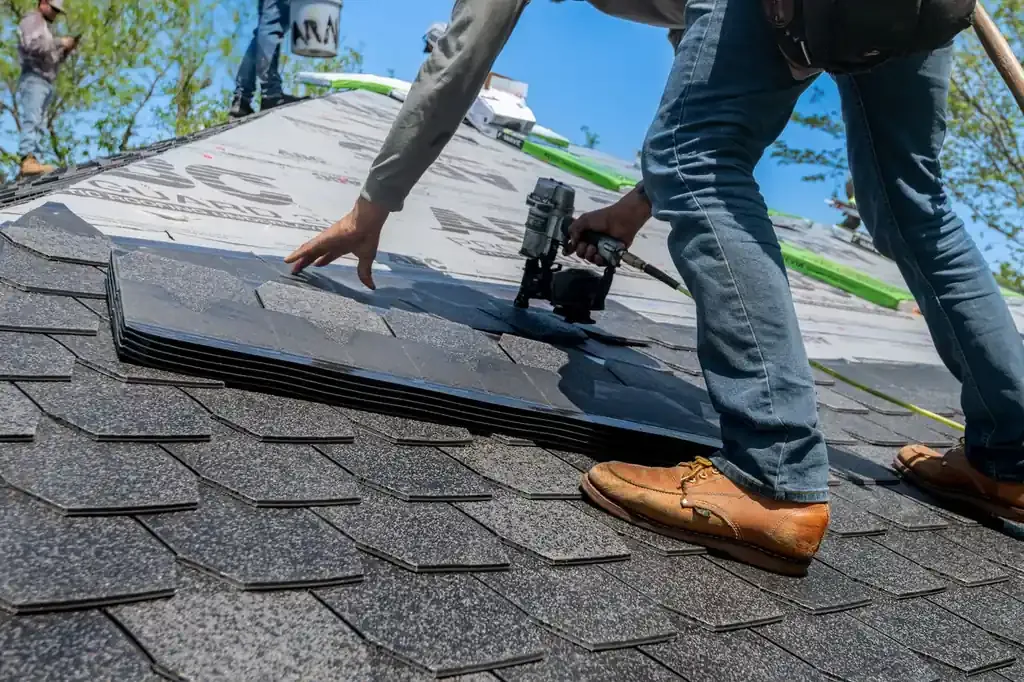
We remove the agreed roofing layers, inspect the exposed deck, and replace unsound sections identified during the work. Then we install roof underlayment, flashing, and the selected covering in the correct sequence. A roofing nail gun, chalk line, and roofing square help maintain consistent placement; active work on a typical home often spans one to three days.
Inspect deck
Install layers
Fit covering
Final checks and cleanup
Our crew checks edges, penetrations, valleys, and ridge details, then clears loose debris and collects fasteners from accessible areas. We walk through completed work with you and explain any maintenance points or remaining follow-up items. You receive job documentation that records the installed materials and relevant roof details.
Check details
Clear debris
Review work
Tools and installation methods
Move across a circle, or focus it and press Enter, for an illustrative thermal view of the photograph.
Roofing nail gun
We use a roofing nail gun to fasten compatible shingles efficiently and consistently. Nail placement and depth still require attention so the covering remains secure without damaging the material.
Chalk line
A chalk line marks straight layout references across roof planes. It helps the crew keep courses aligned and maintain consistent exposure as installation moves from the eave toward the ridge.
Roofing square
We use a roofing square to check cuts and layout at edges, valleys, and roof transitions. Accurate measurement reduces uneven joins and helps materials meet cleanly around complex shapes.
Moisture meter
A moisture meter helps assess damp wood when a roof leak or exposed decking raises concern. Readings inform whether the affected substrate needs further inspection or replacement before new material covers it.
Roofing ladder
A roofing ladder provides controlled access on sloped surfaces when positioned and secured appropriately. It supports safer movement for inspection and material handling while the crew uses required fall protection.
Thermal views are illustrative, generated from the photographs.
Methods
Layered water-shedding installation
We install the roof from the lower edge upward so each layer sheds water over the layer beneath it. Underlayment, flashing, covering, and ridge details must work together. At valleys and penetrations, we follow product requirements and roof geometry to avoid creating a reverse path for water.
Deck-first inspection
After removal, we inspect the exposed roof deck before installing new materials. The crew identifies soft wood, damaged edges, and areas where fasteners cannot hold. We correct those conditions first, then continue with underlayment and covering so the finished system has a stable base.
Ventilation coordination
We review existing intake and exhaust openings as part of roof planning instead of treating vents as an afterthought. Vent placement must suit the roof layout and product system. We discuss any needed changes before closing the roof, helping manage attic airflow and moisture conditions.
Manufacturer-guided fastening
Fastener type, placement, and spacing follow the requirements for the selected material and roof configuration. We use layout marks to keep courses consistent, then check edges and transitions as work proceeds. This method supports secure installation without substituting a generic pattern for product instructions.
When a new roof makes sense
Recurring valley leak
A Tomball homeowner finds recurring ceiling stains after rain despite repeated repairs around a roof valley.
We inspect the valley, surrounding shingles, underlayment, and attic for a continuous water path. If the failure extends across several slopes, we explain a complete installation and identify any decking repairs needed. If it remains isolated, we show the repair option instead.
Outcome: You get a roof plan based on the source of the leak, with damaged layers corrected before they cause more interior staining.
Worn home shingles
An older home in Old Town Tomball has widespread curling shingles and visible wear at the roof edges.
We assess the roof covering, edge metal, ventilation, and deck condition, then compare appropriate replacement materials. The installation plan accounts for removal, underlayment, flashing, and cleanup so the work addresses the whole roof rather than only its most worn face.
Outcome: The home receives a coordinated roof system, and you know which details were renewed and which conditions were found beneath the shingles.
Storm damage
A storm lifts shingles across several slopes near Creekside and leaves the underlayment exposed.
We check the exposed areas, adjacent courses, roof penetrations, and attic for water entry. Where damage is broad, we explain installation options and the steps to keep the building protected while work is arranged. The plan includes proper edge and flashing details.
Outcome: The roof is restored as a complete system instead of relying on scattered patches that leave nearby damage unaddressed.
Commercial roof renewal
A property manager needs to replace a worn commercial roof while keeping building access clear.
We review roof access, drainage, penetrations, and the existing assembly before planning installation stages. We discuss material and sequencing options with the manager, identify areas that require tenant coordination, and keep the work route organized around the building's use.
Outcome: The property receives a defined roof project with practical staging and clear communication about the work areas and sequence.
Old Town TomballAmiraCreekside
How roof installation works in Tomball
Tomball's warm, humid weather and heavy rain put a premium on drainage, sealed transitions, and sound roof edges. We plan new roof installation Tomball TX projects around the building's pitch, valleys, tree exposure, and existing gutter layout. Many homes have multiple roof planes, dormers, chimneys, or skylights that require careful flashing rather than a simple field installation.
In Harris County, the applicable permit and building requirements depend on the property's jurisdiction and project scope, so we check the rules relevant to the address instead of assuming one process fits every job. Our crew also watches the forecast because rain during tear-off can expose the deck and interior. We stage the work to limit the time the structure is open and keep materials organized.
After storms, we look for wind damage, missing shingles, and flashing leaks that may not show from the driveway. You receive an explanation of the roof condition, the materials planned, and the sequence from removal through final cleanup.
Old Town Tomball: Older homes can have layered repairs and roof transitions added over time. We check the deck and flashing carefully before deciding whether to repair or install a complete system.
Amira: Multi-plane roof designs need consistent drainage at valleys and eaves. We map those water paths and coordinate the covering, flashing, and edge details.
Creekside: Tree cover and storm exposure can leave debris or damage around roof edges. We inspect valleys, gutters, and penetrations as part of the installation assessment.
Lakewood Grove: Homes with varied roof pitches need material and fastening choices suited to each plane. We measure the structure and review how runoff reaches the gutters.
Heavy rain tests roof valleys, flashing, and drainage connections: Water concentrates where roof planes meet and around chimneys, vents, and skylights. We give these transitions close attention during installation and check that runoff moves toward the eaves without entering behind the covering.
High humidity can prolong drying after leaks or roof exposure: Damp decking and attic materials need careful assessment before they are covered. We check the affected substrate and correct damaged sections, helping avoid trapping moisture beneath a new roof assembly.
We walk the roof concerns with you and explain the visible findings.
We protect nearby surfaces and organize material access before work.
We review completed details, cleanup, and the next maintenance steps.
From problem to finished result.
IllustrativeThe thermal view is generated from the photograph. It is not a measurement. Drag the handle, or use the arrow keys once it is focused.
Recurring valley leak corrected
Before: A homeowner had patched a roof valley twice, but a ceiling stain returned after strong rain. The visible shingles were worn, and the attic side of the roof deck showed moisture marks near the same path. The repeated leak pointed to a broader failure than a single exposed nail or loose shingle.
After: We removed the failing roof section, checked the exposed decking, and corrected the valley and underlayment before installing new shingles. The affected roof area was completed in two workdays, including cleanup and a final review of the water path. The homeowner could see the repaired transition rather than another surface patch.
Check the valley and nearby ceiling after major rain, and keep leaves out of the drainage path. Arrange a roof review if a new stain appears or shingles shift.
Widespread shingle wear renewed
Before: A Tomball home had curling shingles on multiple slopes, with several pieces missing near the eaves. The roof still shed water in light rain, but repeated wind exposure had opened edges and left the homeowner unsure how long repairs would hold.
After: We removed the worn covering, inspected the deck, replaced two damaged sections, and installed new underlayment and shingles. The installation took three workdays because of the roof's multiple planes. New edge and ridge details completed the system, and the crew cleared debris before walking the roof with the owner.
Look over the roof from the ground after windy weather and keep gutters clear. Schedule a closer inspection if you see lifted edges, loose pieces, or water stains.
Storm-damaged roof rebuilt
Before: After a storm, a property had missing shingles on two slopes and water entering near a roof penetration. Temporary protection reduced immediate exposure, but adjacent material was brittle and the flashing area had also deteriorated.
After: We assessed the full roof, removed the damaged covering, and repaired the affected deck before installing the new system. The work included renewed flashing at the penetration and checked edges across both slopes. The completed roof restored a continuous water-shedding surface, with job details reviewed at the final walkthrough.
After future storms, inspect the attic and ceilings for fresh moisture and look for visible material loss. Address a lifted shingle or damaged flashing before the next heavy rain.
Roof failures a new installation resolves
A roof that leaks in several places or has widespread material failure often needs more than another patch. For Tomball homeowners weighing roof installation cost in Tomball TX, our first task is identifying the cause and extent of the damage. We connect visible symptoms to the layers that need attention.
Repeated leaksRepeated leaks return after small repairs near valleys and chimneysWater can damage attic insulation, roof decking, and interior finishes while the visible ceiling stain grows. Repeated wetting also makes it harder to isolate the original entry point. We trace the water path across the roof, inspect valley and chimney flashing, and check nearby decking. If failure is limited, we repair the affected detail. If the underlayment or covering has widespread deterioration, we explain a complete installation so the underlying cause is addressed rather than covered by another temporary patch.
Shingle failureCurling or missing shingles leave roof areas exposed to rainWind-driven rain can reach the underlayment through open areas, especially at edges and ridges. Continued exposure accelerates material loss and can lead to attic water damage. We assess how far the shingle failure extends and whether the surrounding roof still holds fasteners securely. A localized repair is appropriate for isolated damage; broad aging or repeated loss points toward new installation. We check the roof deck and replace unsound sections before installing a compatible covering.
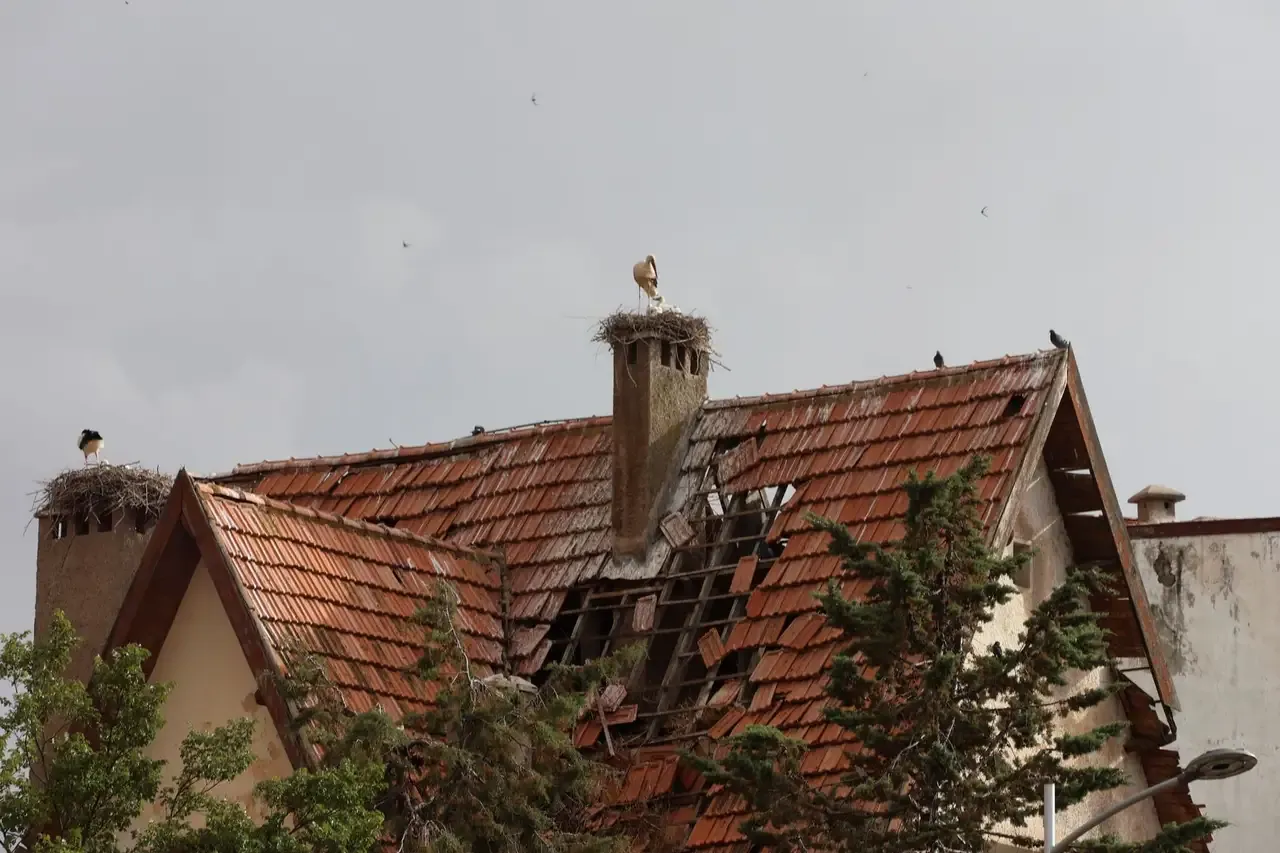
Soft deckingSoft roof decking makes the surface uneven underfootWeak decking can prevent secure fastening and allow the roof surface to sag. Covering compromised wood without correction leaves the new material unsupported. During tear-off, we inspect exposed decking and mark areas that are split, wet, or unable to hold fasteners. We replace affected sections before continuing with underlayment and roof covering. You can see where the work was needed, and the finished assembly rests on a sound substrate.
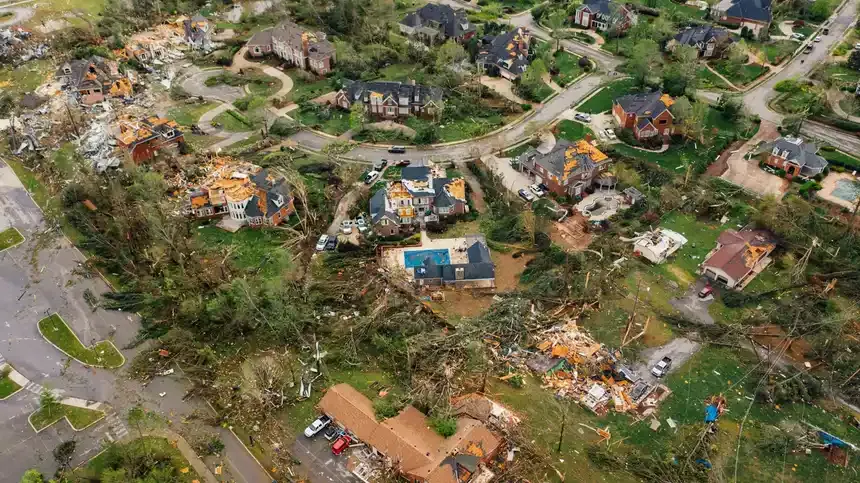
Storm damageStorm damage affects multiple roof slopes and transitionsWind or hail can break seals, dislodge shingles, and damage flashing in several locations. Water entry may appear days later, after the next heavy rain. We inspect the full roof rather than only the most obvious impact point, including edges, valleys, vents, and flashing. Our findings show whether repairs can restore the system or whether broad damage calls for installation. We also identify exposed areas that need prompt protection while permanent work is planned.
What a complete new roof delivers
A sound roof directs water away and gives the structure dependable coverage.
Controlled water routing
We build the roof so water travels over the covering, across the drip edge, and into the gutters instead of behind the fascia. Roof valleys and chimney areas receive particular attention because several planes meet there. That careful detailing reduces the chance that one failed seam will send water into your attic or ceiling.
A sound roof deck
Before covering the structure, our crew checks exposed roof decking for soft spots, rot, and fastener failure. Replacing damaged sections before installing new material gives shingles or metal panels a stable base. You know where the underlying issue was found, rather than discovering it later as a dip, loose fastener, or interior water stain.
Materials matched to your home
We compare roof pitch, drainage, appearance, and maintenance needs before discussing asphalt shingles, metal roofing panels, or other suitable systems. A sample and product details help you weigh trade-offs without guessing from a catalog photo. Our recommendation follows the roof's design and your priorities, not a one-material-fits-all approach.
Fewer surprise interruptions
A clear sequence helps you prepare for tear-off noise, driveway access, and debris handling. We identify staging and protection areas before work begins, then keep the property organized as the roof changes. For many straightforward homes, active installation takes one to three days, depending on roof size, weather, and repairs uncovered.
What you receive
Clear records you can keep and share.
Material record
Installed product details for your project
Photo log
Images of relevant roof conditions and work
Work summary
Notes on completed installation tasks
Care notes
Practical roof maintenance reminders
Repair or full installation?
The right choice depends on how much of the roof system has failed and whether the underlying layers remain sound.
Localized repair
A limited correction for isolated damage on an otherwise sound roof.
One leak source
Small area of damage
Nearby material remains sound
Partial renewal
Replacement of a defined section when damage is limited to one roof area.
One slope affected
Deck repair is localized
Materials can be matched
Full installation
A complete roof system when widespread failure makes repeated patches ineffective.
Wear across several slopes
Recurring leaks in multiple areas
Underlayment needs renewal
Roof system materials
Asphalt shingles
Metal panels
Roof underlayment
Ice and water shield
Roof flashing
Ridge vents
Drip edge
Roof decking
Service ZIP codes.
A list like this tells people straight away whether you cover their street. Not listed? Call and ask: it only takes a minute.
Our old shingles had started curling, and a stain appeared after a heavy rain. The crew checked the attic and found a soft section of decking near a valley. They explained the repair, replaced the damaged wood, and finished the roof in two workdays. The cleanup was thorough, and we understood what had changed from the original plan.
We wanted to compare shingle options before committing to a new roof. The team walked us through the underlayment, ventilation, and flashing rather than only discussing color. They protected the planting beds and kept us updated during tear-off. The completed roof looks even, and the water stain over our hallway has not returned.
After wind lifted shingles along one edge, we asked for a full assessment instead of another patch. The crew documented the damaged sections and explained why replacement made sense for this building. Work was organized around access to the property, and the final walkthrough covered the roof edges, vents, and cleanup.
Roof installation questions
The final amount changes with tear-off layers, decking replacement, flashing complexity, and access. Typical 2026 pricing should be based on measured roof area and the selected system, not a street-view guess. We inspect the roof and explain the work contributing to the total before you choose a plan.
Most straightforward residential installations take one to three workdays, while complex roofs or extensive deck repairs take longer. Roof size, steepness, material, tear-off layers, and rain all affect the schedule. We explain the expected sequence, including removal, substrate checks, installation, and cleanup. A commercial roof or a large multi-plane home requires a project-specific timeline because staging and system details differ.
Permit requirements depend on the property's jurisdiction and the exact scope, so we check applicable local rules before work is scheduled. Roof installation must also follow relevant building requirements, including applicable IBC or IRC provisions and product instructions. We explain the permitting steps that apply to your address and project. Do not assume a full replacement and a minor repair follow the same process.
A complete same-day new roof installation is uncommon; most homes need one to three workdays once materials and crew work are underway. If a storm has opened the roof, we first focus on stopping water entry and protecting exposed areas, then plan permanent installation. A same-day roof inspection or temporary protection may be possible depending on conditions. Call (877) 791-3217 and describe the damage and address.
If your roof is leaking, aging, or showing storm damage, call our Tomball team at (877) 791-3217. We will discuss the roof, arrange an inspection, and explain the next practical step.
Call (877) 791-3217 to discuss roof replacement, roof repair, a leak, or storm damage at your Tomball property. Our phone team can hear the details and connect your request with an independent roofing company. Contact us during regular business hours, Monday through Friday, 8 a.m. to 6 p.m.; for active water entry, describe where it is happening when you call.